
Businesses across the world consider efficient delivery of shipments to be a growth driver, and IoT-based start-up Roambee fills this need with real-time reports to businesses using tracking data.

It would pave the way for Jammu and Kashmir to attract large-scale investments, the industry leaders said.

This innovation works by stimulating our natural organs so that it can produce and maintain the insulin balance.

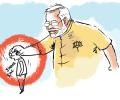
Mrs Gandhi's power ebbed and peaked with the times. Mr Modi's has almost been constant, barring the few months of hard dip after the 240 seats of 2024, points out Shekhar Gupta.

Prime Minister Narendra Modi is making his inaugural address on the 95th Annual Day of Indian Chamber of Commerce via video conferencing.

Most analysts expect growth in the sales of Nifty-50 companies to decelerate, albeit marginally, in the quarter ended December compared to the corresponding period of 2013-14, with metals and real estate companies pulling down earnings.

It bounced back from the historic low of 41 recorded in the April-June quarter, during the initial days of the pandemic and lockdown.

'The 5.3% growth in wages per employee is the lowest growth in nine years,' points out Mahesh Vyas.

Gadgets and gizmos that the big bosses of the business world are hoping to lay their hands on this gifting season.

RBI had previously cut repo rate by 0.25 per cent each in January and March.

Billionaire Mukesh Ambani's Reliance Industries Ltd may spend about $12-15 billion over the next few years on AI infrastructure that could include a giant 1GW data centre, Morgan Stanley said in a report. Ambani had at the company's annual shareholder meeting in August announced a major push into AI through a new subsidiary and strategic partnerships.

Prime Minister Narendra Modi on Friday said both public and private sectors need to leverage synergies and think out of the box to seize opportunities arising as a result of the emerging global environment. While interacting with noted economists and experts at NITI Aayog ahead of the Union Budget, the prime minister also applauded the success of the India Digital story and the rapid adoption of fintech across the country, an official statement said. During the meeting, economists offered suggestions on ways in which India can sustain its development momentum, it added.

Expressing serious concerns over the current account deficit touching a record 4.8 per cent in 2012-13, India Inc on Thursday asked the government to take all policy measures, including boosting exports and foreign exchange inflows to bring down CAD.

Equity dividend payment rises 14.9 per cent in 2010-11.

For fast-moving consumer goods, growth is likely to be tepid.

Indian industry put forth its demands for cut down on income and corporate tax rates in a pre-budget consulatation meet.

Recovery from the second wave of the pandemic in April-May is expected to be swifter as compared to the first wave in 2020, according to the Confederation of Indian Industries (CII) chief executive officers (CEOs) poll of 119 top corporate. During the second wave, the lockdowns were largely designed to limit social gatherings and impact on economic activities was restricted. This helped arrest the impact of the second wave on economic growth, according to a survey conducted by the industry lobby group Confederation of Indian Industries (CII). About 59 per cent of the CEOs polled expect the recovery in sales to be better than in the first wave for their companies, while 46 per cent of them expressed a similar trend for their respective industry sectors.

Officers across departments and ministries have been asked to speak to people across sectors for 'SWOT' analysis of issues for revival of the economy.

Corporate India continues to be generous in rewarding its shareholders with big dividend payouts. This is especially true for shareholders of companies such as Tata Consultancy Services (TCS), Hindustan Zinc (HZL), and Coal India (CIL) which are seen as cash cows of large business groups and the government. Boosted by a big payout by these three companies, the combined equity dividend payout by listed companies was up 38 per cent year-on-year (YoY) to a record high of Rs 2.27 trillion in 2022-23 (FY23), compared with Rs 1.65 trillion in 2021-22 (FY22).

Banking is a boring business but still the banker should enjoy it as fancy awards and cozy relationships with politicians, Bollywood stars and corporate honchos cannot save them if the job is not done properly. In the concluding part of the series Tamal Bandyopadhyay wonders how long Kochhar would need to wait for her redemption or downfall and atonement.

Indian companies' market capitalization has grown at the fastest pace last year among major economies despite contraction in GDP, economists from SBI said, flagging the risks to financial stability it poses. Further, retail investors have shown higher interest in markets and their numbers have increased by 1.42 crore in FY21 and another 44 lakh in April and May, they said in a note, wondering if this will be a lasting behavioural change or is transitory. The economists at the country's largest lender attributed the growth in equity markets to lower returns on other financial instruments amid a low rates regime, increase in global liquidity, and even a tendency to spend more time at home because of mobility restrictions which led many to trade more.
Indian industry expressed disappointment on Wednesday over Finance Minister P Chidambaram's Budget for 2007-08, raising concerns on lack of measures to increase productivity and for losing an opportunity to provide relief to the corporate sector.

Employees of some top Indian companies were in for a pleasant surprise when they received a mail from their HR team announcing a hike in salaries and bonuses. Led by IT firms and start-ups, HR managers say that while some have offered cash and stock options, others are in a wait-and-watch mode and add the trend will pick up in other sectors. For example, IT giant Cognizant - which had an attrition rate of 19 per cent in the December quarter - has established a $30-million employee retention fund in order to bring down the high attrition rate.

The government is drawing up a relief package for industry with steps such as relaxation of asset-classification norms by banks, thus allowing companies to delay the repayment of loans, and tax holidays for the worst-hit sectors like aviation and hospitality. But it might not be enough to stop more bankruptcies from getting filed.

Industrialists affirm their belief that the adverse effects of demonetisation and the goods and services tax are finally over.

Business reacted with caution to the reforms of 1991, and demanded protection from multinationals and imports. Twenty-five years later, traces of that demand can still be found, reports Bhupesh Bhandari.

In a conversation with Vishal Chhabria and Hamsini Karthik, Gautam Chhaochharia, executive director & head, India Research, UBS, explains why implementing goods and services tax (GST) may not be as disruptive as many perceive it to be. But, he warns investors shouldn't have high expectations on corporate earnings.

India's biggest firm, Reliance Industries, has decided to cut salaries by 10 per cent in its oil and refining divisions. Several smaller companies like Kajaria Ceramics have followed suit with cuts as high as 40 per cent for those earning more than Rs 50 lakh.
The sudden manner in which the Centre has chosen to address the demand for a separate state of Telangana, carved out of Andhra Pradesh, raises an important question for corporate India regarding the future of Hyderabad.

Almost 2,000 companies whose private provident and pension funds have invested in non-convertible debentures of IL&FS group firms are staring at the prospect of booking losses to the tune of Rs 9,000 crore or more if the interest income is added.
Govt has decided to suspend Sections 7, 9, and 10, which are used to trigger insolvency proceedings for six months or a period not exceeding one year from the date they commence.

Experts say the focus is on preserving liquidity as there is uncertainty over the duration and impact of the 21-day nationwide lockdown imposed to check the spread of COVID-19.

Hitting back, Congress spokesperson Supriya Shrinate posted a picture of Afridi with BJP leader Anurag Thakur to say that the ruling party should be ashamed for asking questions from the Congress while it itself maintain ties with them.

Corporate India lags the rest of its Western and Asian peers by a wide margin when it comes to the presence of women on their boards, with just 17.3 per cent of the large companies having them on their key decision making bodies, an international report said on Tuesday. However, this is a near 6 percentage points improvement between 2015 -- when it was only 11.4 per cent -- and 2021, Swiss brokerage Credit Suisse said in the report, which covered over 33,000 executives from more than 3,000 companies across 46 countries, including over 1,440 firms across 12 Asia-Pacific markets. Female representation on boards of large Indian companies has increased by 5.9 percentage points from 11.4 per cent in 2015 to 17.3 per cent in 2021.

Stressed MSME borrowers would be eligible for restructuring of debt, if their accounts were classified standard.

'A bold, progressive step forward,' Kotak Mahindra Bank CEO Uday Kotak said of Nirmala Sitharaman's corporate tax breaks.
In spite of burgeoning initial public offerings, fund mobilisation by Indian companies through debt and equity issues in the year grew only 14 per cent, against close to 40 per cent in each of the earlier three financial years.
After dishing out a slew of incentives for foreign investors, France is now aggressively trying to woo the Indian corporate and holding talks with bigwigs like the Tatas, Reliance, Godrej and Mahindra and Mahindra.
A UK government-funded organization British Midland, dedicated to attracting international businesses to the region comprising East Midlands and West Midlands, is eyeing around 40 investors from India across various sectors in the next three years.
